
The Power of Silence
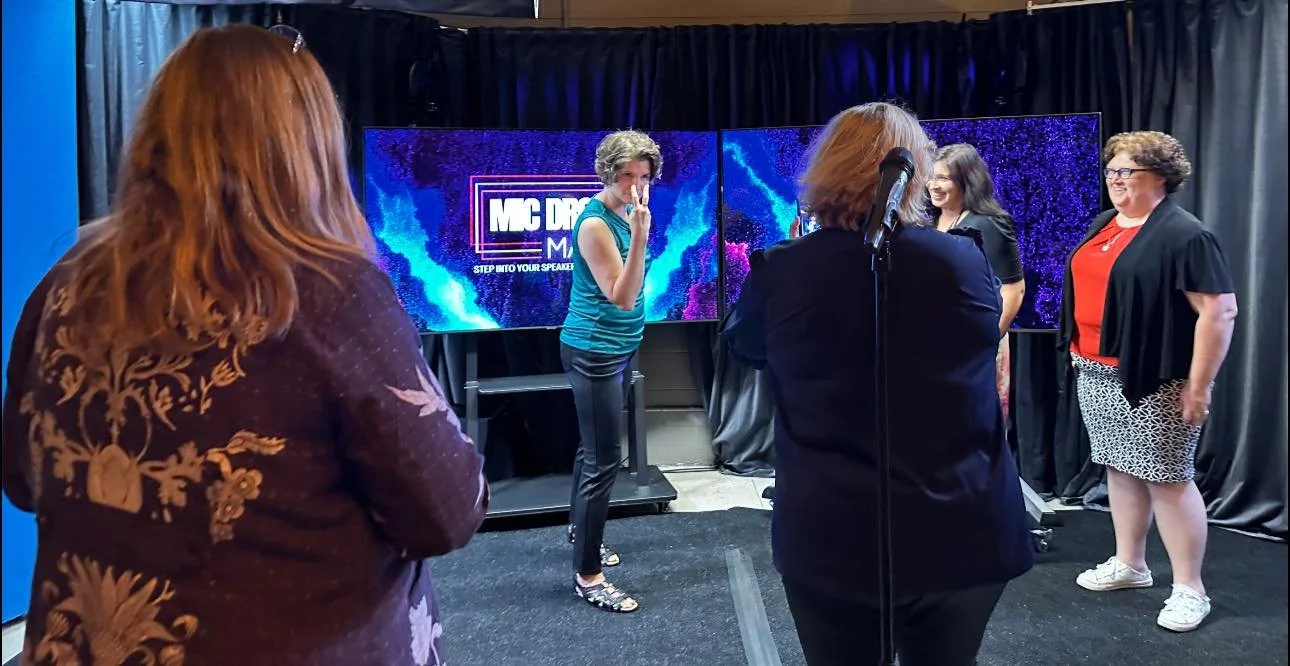
Most people are uncomfortable with silence, especially when they're holding a microphone. It can be tempting to keep talking long after you've finished saying what needs to be said. Is this something you do? Think about it.
Some of the best professional speakers I know are the most adept at incorporating silence.
Silence? Yes. Silence.
Much like powerful leadership leverages listening, impactful speakers leverage silence.
In visual art or graphic design, a visual composition is enriched when negative space—the space between objects—is carefully considered. For example, when I first noticed the arrow in the FedEx logo, it blew my mind. It's a brilliant use of negative space. And if you haven't seen it, look between the "E" and the "x" next time you see one of their trucks on the road.
An emcee's performance requires balance. Balance between leading and following. Balance between sticking to the script and leaving room for magic. Balance between speaking and listening. Balance between sound and silence.
Pause for Impact
When you speak, a poignant pause can punctuate a powerful statement. Slowing down and using silence wisely gives your words gravitas. Especially when an event is packed full of value, content and brilliant speakers, offering a strategic moment or two of silence can help the audience catch up, keep up and get ready for what's next. As with body language, you need to play around a little bit in order to find the sweet spot between emphasis and awkwardness. Trust me, it's a fine line.
Leaving a few seconds of silence after asking a question begins to make the audience uncomfortable, which is exactly where you want them to be so that someone will raise their hand and offer a response. Hold the silence a second or two too long, though, and they begin to move beyond uncomfortable into quiet freak out, which is where you lose them. They might wonder if you've lost your place or forgot what you're trying to say. They could stop trusting you to lead them. It's a very, very fine line, and you will cross it. The good news is that you can always find your way back with some keen self-awareness and by continuing to practice and adapt.
The Sweet Spot
The average noise level of a crowded conference room or office is somewhere between 70 and 90 decibels. The average human voice is around 60. The library is around 30 decibels. When you're speaking in front of an engaged audience, your voice should be the loudest, ideally amplified with a microphone, and the room should be nice and quiet—not quite library-level, but close.
When the noise level in the room begins to rise, this is another sign you could be losing control of the crowd. It might start with a few polite whispers here and there, hopefully related to the content being presented. Gradually, you'll notice a ripple of sound and movement throughout the entire room. When people start turning to one another and having side conversations, it usually means they're ready for a break or some other physical or mental reset.
Two simple ways to grab attention when you need to silence the noise are to increase your own volume or draw out the length of the vowel sound in a single syllable. Either of these approaches provides enough of a pattern interruption to refocus their attention on you without having to resort to shushing grown professionals like preschoolers.
Sound and Silence
People retain the most information in small chunks. Students attending classes that meet three times a week for 50 minutes learn more than those taking a three-hour class once a week. TED Talks are limited to 18 minutes to optimize the reception of their "ideas worth sharing." WHEN Stories™ are kept under 20 minutes for the same reason: maximum impact in easily digestible chunks of time.
Most conferences include a mixture of longer keynote presentations and shorter breakout sessions. Even during longer keynote presentations, it's usually a good idea to break up the time slot by encouraging interaction and engagement approximately every 20 minutes.
When you're having fun, your pace will naturally ebb and flow. You won't rush through important information, and you won't drone on and on. Vary your pace and pitch to stay in control of the energy of the room. A quicker pace and higher pitch builds energy and excitement while a slower pace and lower tones provides a more calming experience. There are times when how you speak is more important than precisely what you say.
When you're having fun, you give your audience permission to have fun with the deep work they may be doing at your conference or event. Laugh, encourage laughter, and your stage presence will be irresistible.
The most successful events are the ones that plan well and at the same time do not have too rigid an attachment to the plans. As an emcee, I often experience the most powerful moments when things are not going according to plan. When you're willing to go off script and meet the audience where they are, magic happens.
The balance between structure and spontaneity offers the flexibility to adapt while maintaining the stability and consistency of your event's purpose. Room for magic includes room for silence.
Ready to take your event hosting skills to the next level?
This article features information from my book, Welcome to the Stage: The 360° Approach to Hosting Events Like a Pro. If you enjoyed it, you'll love the comprehensive guidance, practical strategies and insider techniques I share in the full book.
Order your copy today and discover how to make your next event the one everyone remembers!